$2.0M
$500K
5.7x
Subscribe Free
Read the full deal writeup
Sign up for a free Accredited account to read the editorial writeup, financials, and broker contact for this deal.
Get Free AccessFull Editorial Writeup
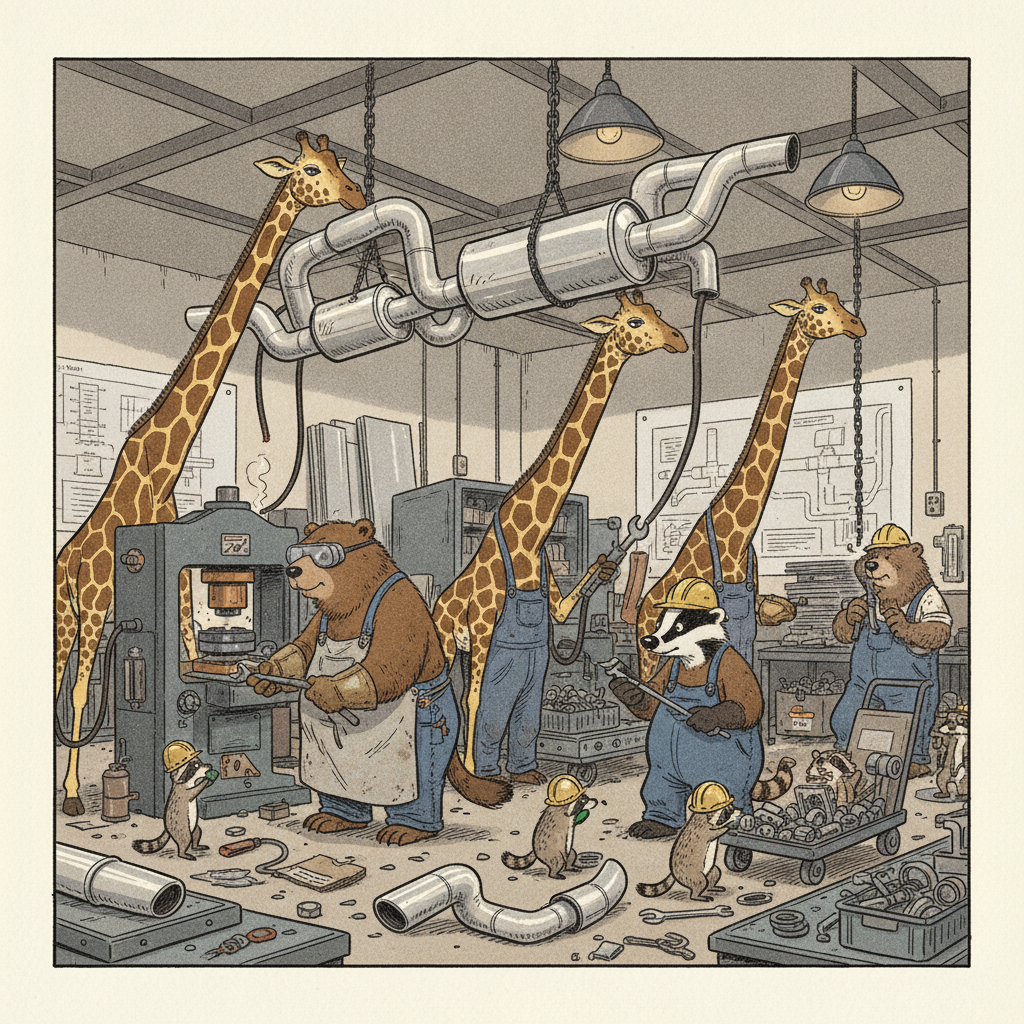
This Northern California Exhaust Component Manufacturer is a California S-Corporation that has been in business for the past 55 years...
Why we like it
- Earnings quality looks solid for the category: $500K cash flow on $1.98M revenue is a 25% margin, which is strong for a small manufacturer and suggests real pricing power or lean overhead. The 55-year track record means these earnings are proven across multiple economic cycles, not a recent spike.
- Durability is the headline here. A business that has survived 55 years in manufacturing has weathered every recession since 1970, which implies entrenched customer relationships, repeat B2B ordering, and a product that stays relevant. That kind of longevity is the closest thing to a moat a small shop can have.
- The product is needs-based rather than discretionary. Exhaust components are a repair and replacement category tied to vehicles that keep running and parts that keep wearing out, so demand does not evaporate in a downturn the way it does for consumer-facing manufacturers.
- It is a boring, hard-to-replicate business. Fifty-five years of tooling, know-how, and supplier relationships create meaningful switching costs and a barrier to new entrants, and boring businesses with recurring reorder demand are exactly what compound quietly for a patient operator.
How to improve it
- Map customer concentration in the first 30 days and lock the top accounts under multi-year supply agreements. A 55-year shop almost always has a handful of legacy customers driving most revenue, and formalizing those relationships protects the earnings base and the resale multiple.
- Audit pricing across the product catalog and push a targeted increase on low-volume, high-stickiness SKUs. Long-tenured manufacturers frequently underprice out of habit and loyalty, and even a 3 to 5 percent lift on sticky parts flows almost entirely to the bottom line.
- Build a basic digital front door and outbound sales motion. A five-decade-old shop likely runs on inbound and word of mouth, so a simple website, a parts catalog, and one salesperson calling adjacent distributors and repair chains could unlock new B2B accounts without much capital.
- Document tribal knowledge before the owner leaves. Capture the manufacturing processes, tooling setups, and supplier contacts in written SOPs so the operation does not depend on the founder's memory, which also de-risks the transition and makes a future exit cleaner.
- Evaluate equipment condition and capacity utilization. If machines are running at capacity, a targeted capex investment could expand output to serve unmet demand; if they are aging, plan replacement now to avoid a surprise breakdown that halts production.
- Explore adjacent exhaust components or related metal parts to widen the product line. Selling more parts to the same trusted customer base is the cheapest revenue there is, and a 55-year reputation gives instant credibility on new offerings.
Diligence notes
- Verify the $500K cash flow with three years of tax returns and add-back schedules. At 5.7x, you are paying a premium multiple for a small manufacturer, so confirm the earnings are real, recurring, and not propped up by one-time jobs or aggressive owner add-backs.
- Pull customer concentration data immediately. If one or two accounts drive the majority of the $1.98M in revenue, the durability story weakens sharply and the price should reflect that risk, especially if those relationships live with the departing owner.
- Inspect the equipment and understand the lease or ownership of the facility. Real estate is not included, so confirm the lease terms, remaining runway, and renewal options, and assess whether aging machinery will require near-term capex that erodes the return.
- Assess owner dependency and the transition plan, which is not disclosed. After 55 years, the founder likely holds critical supplier relationships, pricing knowledge, and production know-how, so negotiate a meaningful training and handover period and structure part of the price around a smooth transition.
- Check supplier concentration and input cost exposure. Exhaust components rely on steel and specialty metals, so understand how raw material price swings flow through to margin and whether the business can pass increases to customers.
Source
More like this
- 34-Year Manufacturing Company - Camden County, NJ
- Full-Service Plastic Injection Molding & CNC Manufacturer, 36-Year Kentucky Shop
- Iowa Rebar Fabricator - 30+ Year Regional Leader
- Specialty Painting & Powder Coating, 40-Year Oregon Architectural Finisher
- Midwest Aerospace & Defense Precision Machining
- Agricultural Inputs Maker - Proprietary Crop Nutrient Formulations
Want the full analysis on every deal? Unlock the complete platform with Accredited Pro to screen live listings and read our operator-level writeups.