Read the full deal writeup
Sign up for a free Accredited account to read the editorial writeup, financials, and broker contact for this deal.
Get Free AccessFull Editorial Writeup
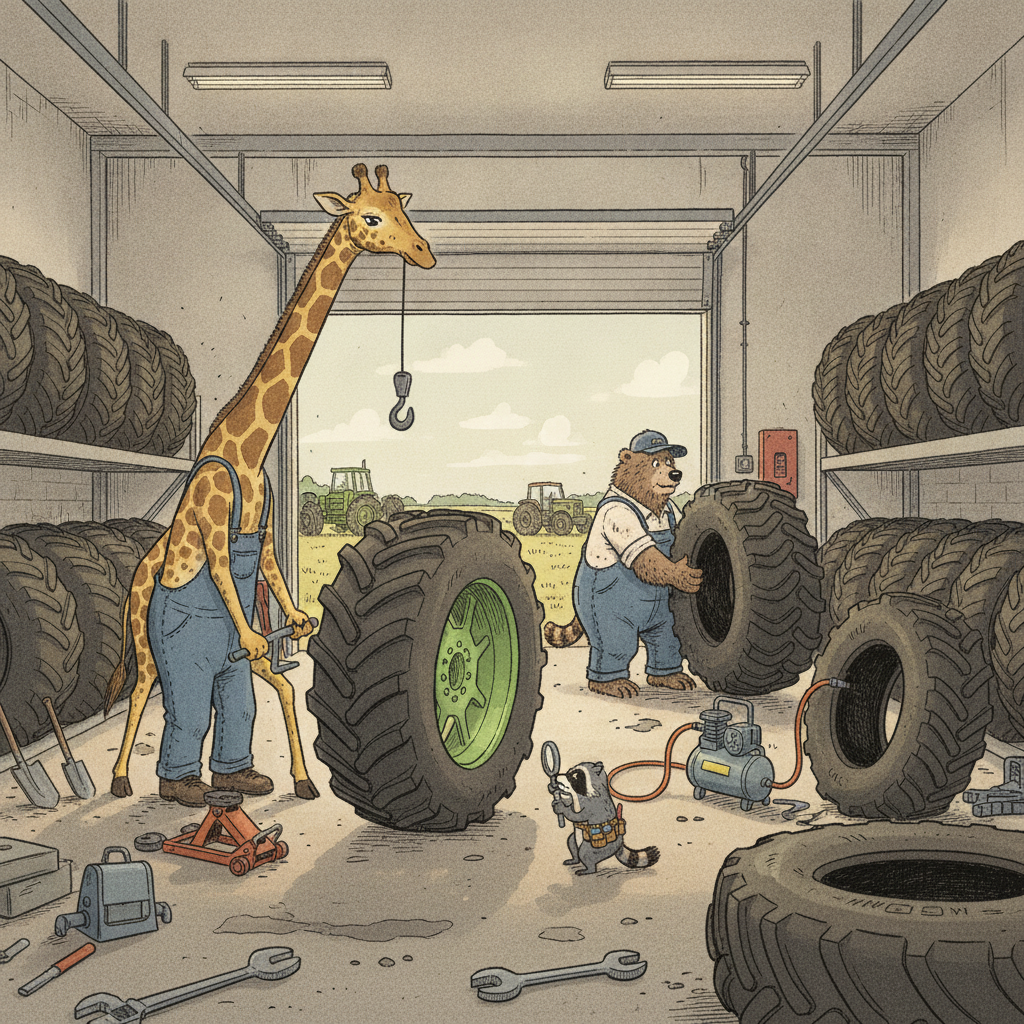
This is a commercial, agricultural, and off-the-road (OTR) tire dealership operating in the Midwest, specifically Wisconsin. The business sells and services tires for heavy-duty applications: commercial trucks, farm equipment, and large off-road machinery. On roughly $6.6 million in 2025 revenue it produced about $831,000 in EBITDA, a healthy 12.5 percent margin for a tire and service operation, which suggests real service revenue mixed in alongside the product sales rather than pure wholesale tire distribution.
The customer base skews toward commercial and agricultural end markets, which is the attractive part of the story. Fleet operators and farms cannot run their equipment on bald tires, and OTR and ag tires are consumable, high-ticket replacement items with meaningful service and mounting labor attached. That gives the business a captive, need-it-now customer profile that is far stickier and less discretionary than consumer passenger-car tire retail.
The listing carries $2.43 million in inventory (not included in asking price) and owned real estate valued at $675,000 (also not included in asking price). The asking price is undisclosed, and years in business, ownership structure, and seller transition terms are all withheld pending an NDA. Note the broker is affiliated with a Montana-based eXp Commercial agent, so buyer diligence on the local operation will matter.
Why we like it
- Earnings quality looks solid: $831k EBITDA on $6.63m revenue is a 12.5 percent margin, which for a tire dealership implies a meaningful high-margin service and mounting component, not just pass-through tire resale. That margin profile is what separates a real operating business from a low-margin distributor.
- The moat is functional rather than brand-driven: commercial fleets and farms need a local dealer who can mount OTR and ag tires on-site and turn equipment around fast. That geographic and service-capability lock-in makes it hard for a pure-online or out-of-market competitor to steal the account.
- The end demand is genuinely essential. Trucks and farm equipment cannot operate on worn tires, and these are consumable replacement items with regulatory and safety drivers, so spend continues through downturns even when discretionary purchases get cut.
- This is a clean bolt-on for an existing tire dealer expanding its footprint, or a platform for a first-time buyer. The commercial/ag/OTR focus is a specialized niche with fewer competitors than consumer tire retail, and the $2.43m inventory represents real working assets, though buyers must fund that separately.
How to improve it
- Build recurring revenue by launching fleet tire management and scheduled service contracts. Commercial fleets value predictable maintenance and downtime avoidance, and converting transactional buyers into contracted accounts would smooth revenue and raise the exit multiple materially.
- Push the service mix higher. Roadside service calls, on-farm mounting, retreading, and tire pressure monitoring add high-margin labor revenue with modest capex, and every point of margin on $6.6m revenue is meaningful to enterprise value.
- Tighten inventory management on the $2.43m stock. That much working capital tied up in tires is expensive; a SKU-level analysis to trim slow movers and negotiate consignment or vendor-managed inventory with tire manufacturers would free significant cash.
- Formalize a sales function targeting new commercial and ag accounts within the trade area. Many dealerships of this size run on inbound and legacy relationships, so a dedicated outside rep working nearby fleets and co-ops could add revenue without new locations.
- Evaluate a second location or mobile service expansion into adjacent counties. The business already has proven capability; replicating the model geographically is a lower-risk growth path than diversifying into new product lines.
- Implement data-driven pricing on service labor and tire markups. OTR and ag tires are high-ticket and infrequently price-shopped by fleet buyers who prioritize uptime, so there is likely room to raise service rates without meaningful volume loss.
- Lock in and cross-train the experienced team before close. Skilled OTR and ag tire technicians are scarce, and retention agreements plus a documented training program de-risk the operator transition and protect the asset you are buying.
Diligence notes
- Verify the revenue and EBITDA figures against tax returns and financials, since only 2025 numbers are cited and the listing discloses no history. Confirm whether the $831k EBITDA is owner-adjusted and understand what add-backs, if any, are baked in.
- Clarify the real estate arrangement. The $675,000 property is owned but excluded from the asking price, so determine whether it will be sold separately, leased back, and at what rate, because rent will directly hit the go-forward EBITDA you are underwriting.
- Scrutinize customer concentration. Commercial and ag dealerships often depend on a handful of large fleet or farm accounts, so request a revenue-by-customer breakdown and confirm no single account represents an outsized share of sales.
- Assess the $2.43m inventory quality and valuation. Confirm how much is current, salable stock versus aged or obsolete tires, since inventory is excluded from the price and will require substantial separate financing at close.
- Understand the owner's role and reason for selling, both undisclosed here. Determine how involved the seller is in sales relationships and operations, and negotiate a transition period, because owner-dependent accounts are a real risk in this kind of business.
- Investigate supplier and manufacturer relationships. Dealer agreements, volume rebates, and exclusive territory rights with tire brands are core to margins, so confirm these contracts are assignable and survive a change of ownership.
Source
- Franchised Auto Paint & Collision Center, Orange County CA
- High-Volume Exxon Gas Station with Strip Center, Arlington TX
- Island Auto Specialty & Alignment Shop, 20-Year Honolulu Aftermarket Business
- Florida Auto-Glass Replacement Company, Semi-Absentee Pinellas County Operator
- Full-Service Auto & Light Truck Repair Business, 18-Year Houston Shop
- Northern Utah Express Car Wash, Two Sites with Real Estate, Utah
Want the full analysis on every deal? Unlock the complete platform with Accredited Pro to screen live listings and read our operator-level writeups.