Read the full deal writeup
Sign up for a free Accredited account to read the editorial writeup, financials, and broker contact for this deal.
Get Free AccessFull Editorial Writeup
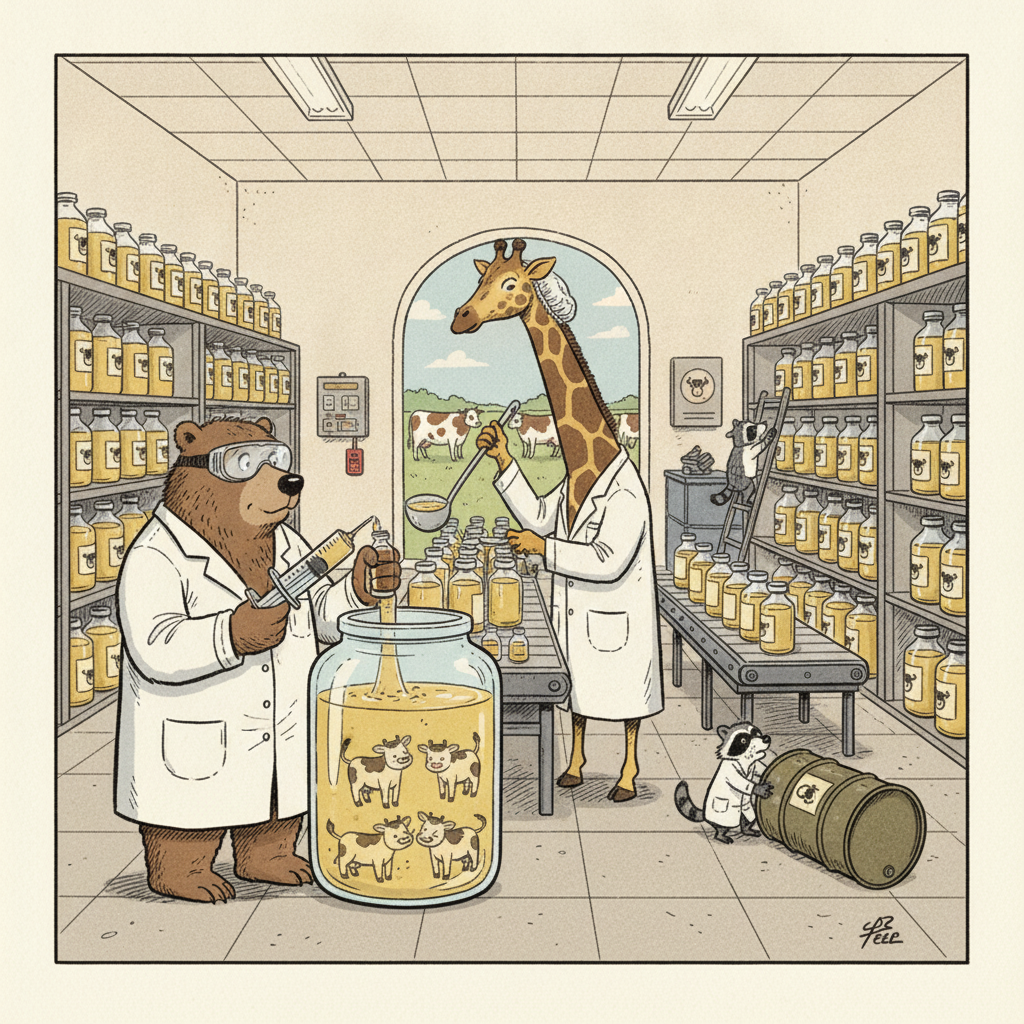
This is a 25-year-old niche manufacturer and distributor operating in the life sciences supply chain. Its core product is fetal bovine serum (FBS) and related bovine-derived products, which are required supplements for cell culture research and biopharmaceutical manufacturing. On top of the serum business, it distributes laboratory consumables, the ancillary supplies research labs need to run alongside the serum, which deepens wallet share with the same customer base.
The customer roster spans university and government research labs to biopharma and biotech companies making cell and gene therapies. That mix matters: these are validated, repeat-purchase relationships where switching a qualified serum supplier is painful and expensive because it can require re-validation of experimental protocols. That validation lock-in is the real moat here, and it is why the listing can credibly claim strong recurring revenue despite the business being a physical-goods producer.
On the numbers, the business does $2.68M in revenue and $547K in cash flow, roughly a 20% margin, with only 4 employees and an owner working about 10 hours a week. The $5M ask works out to 9.14x SDE, which is aggressive for a sub-$3M revenue manufacturer, and includes $807K of inventory plus $85K of FF&E. Real estate is owned but explicitly excluded from the price and available separately.
Why we like it
- Earnings quality is anchored by validated, repeat-purchase customers who cannot casually switch serum suppliers without re-running experiments. Cell culture reagents are consumed and reordered constantly, so revenue is genuinely recurring in economic terms even though this is a physical-goods business. The 20% cash flow margin on $2.68M revenue with just four employees is a lean, well-run operation.
- The moat is regulatory and validation-driven, not brand or marketing. Once a lab or biopharma manufacturer validates a serum lot and supplier into their protocol, they are locked in for years because re-validation is costly and risky. The listing's mention of differentiated products beyond standard serums suggests some proprietary positioning that further raises switching costs.
- Market tailwinds are real and durable. Cell and gene therapy, vaccine development, and biologics manufacturing have driven steady growth in cell culture supplies for over a decade, and this demand is largely non-cyclical because research and biopharma manufacturing budgets are sticky. FBS specifically remains a critical input despite ongoing efforts to find substitutes.
- The operator advantage is enormous given the owner works only 10 hours a week. This is effectively a semi-passive asset that a hands-on buyer could scale meaningfully by adding sales capacity, expanding the consumables catalog, and pushing the R&D pipeline the listing references. Seller financing availability signals the seller's confidence and reduces buyer equity at risk.
How to improve it
- Add dedicated sales and business development capacity immediately. With the owner in for only 10 hours a week and no clear sales team, growth is almost certainly demand-constrained, not capacity-constrained. Hiring one or two technical sales reps to work biopharma and academic accounts could move the top line materially within a year.
- Expand the laboratory consumables catalog and cross-sell it into the existing validated serum accounts. These customers already trust the supplier and buy consumables somewhere; capturing more of that spend is the cheapest revenue available. Build a simple e-commerce reorder portal to make repeat purchasing frictionless and increase order frequency.
- Secure and diversify the bovine serum supply chain. FBS sourcing is geographically sensitive, subject to origin and disease-status requirements, and price-volatile, so locking in multiple qualified supply sources protects margin and reduces stockout risk. Document supplier relationships thoroughly so they survive the ownership transition.
- Formalize and pursue the R&D pipeline the listing references. Serum-free and specialty formulations command premium pricing and differentiate against commodity FBS suppliers. Converting even a portion of the customer base to higher-margin proprietary products would improve both margin and defensibility.
- Build out quality systems and certifications to unlock larger biopharma manufacturing accounts. GMP-adjacent documentation, lot traceability, and consistent certificate-of-analysis processes are gatekeepers to bigger commercial contracts. Investing here upgrades the customer mix from research labs to higher-volume manufacturing buyers.
- Negotiate the real estate separately and model both scenarios. The building is owned but excluded from the ask, so a buyer should evaluate buying it (control and rent capture) versus a market-rate lease that keeps capital in the operations. Either way, get an appraisal so the total cost of ownership is clear before closing.
Diligence notes
- Scrutinize the recurring revenue claim with hard data. Pull customer-level revenue for the last three years, reorder frequency, and revenue retention to confirm that customers are genuinely repeat buyers rather than episodic. Also quantify customer concentration, because a handful of large biopharma accounts could make the business far riskier than the narrative implies.
- Interrogate the 9.14x multiple hard. That is a rich price for a sub-$3M revenue manufacturer with only $547K of cash flow, and $807K of that value is inventory. Separate the going-concern value from the working capital, understand inventory turns and obsolescence risk on serum, and be prepared to negotiate the operating-business multiple down significantly.
- Verify the supply chain for FBS in detail. Understand where the bovine serum originates, the disease-status and country-of-origin documentation, pricing history, and whether supply contracts transfer. FBS pricing has been historically volatile, and a supply disruption or origin restriction could impair the entire business.
- Assess owner dependency despite the low hours. The owner works only 10 hours a week, but confirm which critical relationships, technical know-how, and supplier and customer contacts are personal to them. Ten weeks of training may be inadequate if the owner holds the key validated-supplier relationships or proprietary formulation knowledge.
- Confirm regulatory and validation status of the products. Understand which customers have validated this supplier into their protocols, whether any certifications are required to serve the biopharma segment, and whether regulatory changes around animal-derived products pose a long-term threat to FBS demand. This directly affects both the moat and the terminal value.
Source
- Temperature-Controlled Trucking Company, Cold-Chain Carrier (Relocatable, CA)
- Precision Metal Component Manufacturer, 50-Year Michigan Machine Shop
- Specialty Painting & Powder Coating, 40-Year Oregon Architectural Finisher
- Military Uniform Manufacturer, HUBZone DoD Textile Contractor
- Advanced Emission Monitoring Systems Provider, PEMS & Compliance Solutions
- Agricultural Inputs Maker - Proprietary Crop Nutrient Formulations
Want the full analysis on every deal? Unlock the complete platform with Accredited Pro to screen live listings and read our operator-level writeups.