Read the full deal writeup
Sign up for a free Accredited account to read the editorial writeup, financials, and broker contact for this deal.
Get Free AccessFull Editorial Writeup
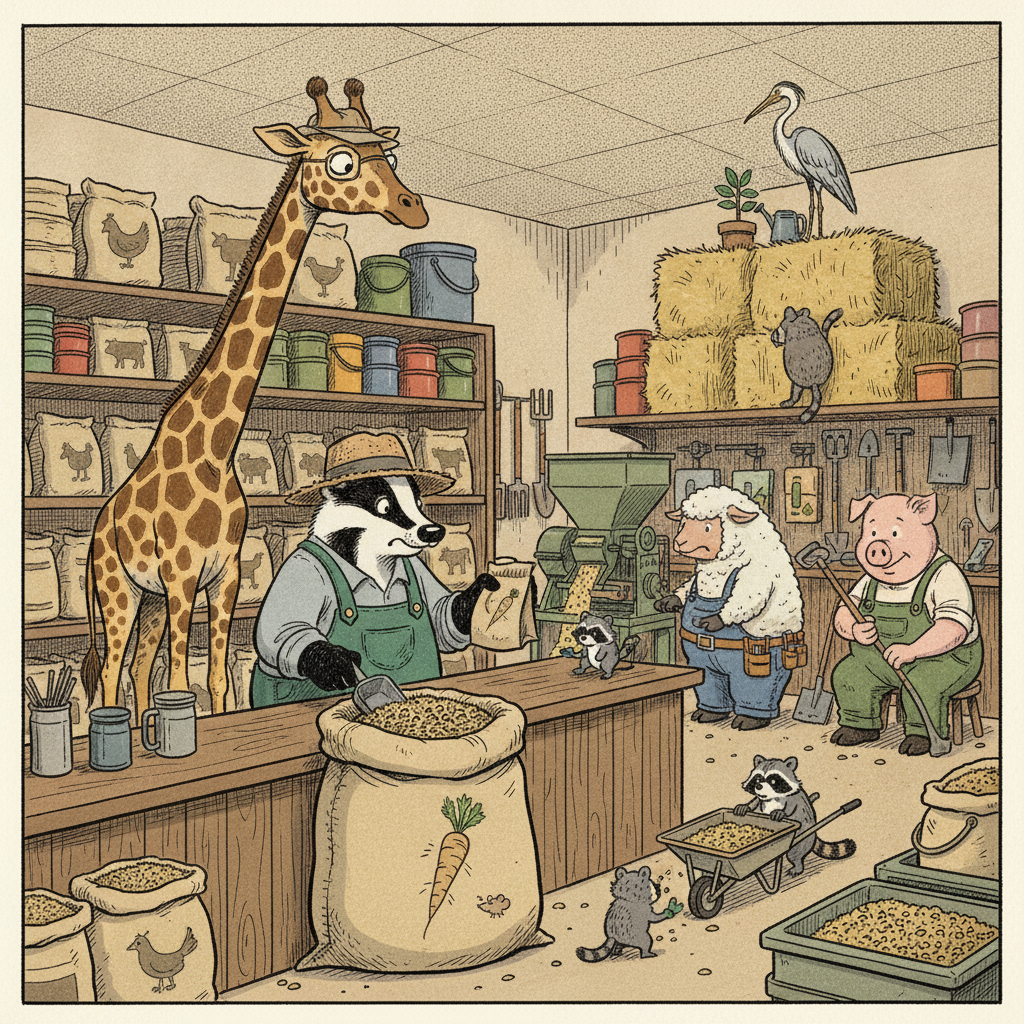
This is a 60-year-old feed, farm and grower supply business serving Central Florida's agricultural Heartland out of Hardee County, one of the most concentrated cattle and ag production regions in the southeast. The company sells livestock and equine feed, mineral and nutritional products, animal health supplies, fencing and farm hardware, tack, and lawn and garden goods, supported by substantial on-site inventory and pole-barn storage. Its customer base is a loyal mix of livestock producers, growers, ranchers and retail farm customers who buy repeatedly out of operational necessity rather than discretion.
The financial profile is clean and improving. FY2025 generated roughly $6.6 million in net revenue, up about 23% year over year, with gross margin near 21%, EBITDA of approximately $827,000 and SDE of approximately $908,000. The business carries no debt, and the asking price of $5,000,000 includes $1,500,000 of inventory and $250,000 of FF&E, meaning roughly $1.75 million of the price is hard assets.
What makes this notable is the moat built from decades of supplier relationships and brand equity in a market with limited full-line competition. Only two other farm-supply retailers operate in Wauchula, and neither matches the company's bulk and custom cattle nutrition, super-sack rations, and post-frame building sales. The business runs lean on 7 employees from a leased 7,500 SF facility, positioned as an essential, repeat-purchase supplier rather than a discretionary retailer.
Why we like it
- Earnings quality is strong for a 60-year-old ag retailer: $914,271 in cash flow on $6.7 million revenue with no debt and well-documented financials. The 23% revenue growth into FY2025 is unusual for a legacy business and suggests real operating momentum rather than a slow decline a buyer has to arrest.
- The moat is consumption-driven demand plus local density. Livestock must be fed regardless of the economy, and the company faces only two full-line competitors in Wauchula, neither of which offers its bulk and custom cattle nutrition or super-sack rations. Six decades of supplier relationships and brand equity are genuinely hard to replicate.
- Hardee County sits in Florida's agricultural Heartland, one of the most concentrated cattle and ag production regions in the southeast. The customer base of ranchers and commercial livestock operators generates repeat, non-discretionary purchases that hold up through downturns, giving the revenue a route-like stability uncommon in retail.
- This is a clean operator opportunity: lean 7-person team, leased facility so no real estate to finance, and an identified growth lane in custom molasses and liquid-feed blends that uses existing rancher relationships. A strategic acquirer or consolidator inherits immediate cash flow with a defined path to deepen wallet share.
How to improve it
- Launch the customized molasses and liquid-feed program the listing already flags. On-site blending, bulk delivery, and ranch-specific formulations are a high-margin, consumption-driven category that leverages existing cattle-nutrition relationships with modest capital, directly increasing wallet share with current accounts.
- Attack the 21% gross margin. Feed retailing lives and dies on purchasing, so renegotiate supplier terms, consolidate SKUs, and review pricing on custom rations where the company has differentiation. Even a two-point margin improvement on $6.7 million in revenue adds well over $130k to the bottom line.
- Implement a formal account management and reorder system for top ranch accounts. Standing delivery schedules, auto-replenishment on feed and mineral, and a simple CRM would convert implicit repeat buying into contracted, predictable volume and reduce the risk tied to any single customer relationship held in the owner's head.
- Optimize the $1.5 million inventory position. That is a large working-capital drag relative to earnings, so tightening turns on slow-moving hardware, tack and lawn-and-garden goods while protecting fast-moving feed frees cash and improves return on the assets being purchased.
- Expand the post-frame and pole-barn building sales line, a category competitors do not match. Marketing this to the same rancher base and adding installation partners turns a product sale into a higher-ticket project revenue stream with limited local competition.
- Build a basic digital and account-ordering presence. Rural ag buyers increasingly order by phone and online, so a simple ordering portal, delivery scheduling, and local SEO against the national chain and lone independent competitor would capture share without heavy spend.
- Secure a long-term lease or purchase option on the facility early. The business operates from a leased 7,500 SF site with pole-barn storage, so locking in favorable, long-dated terms protects the location advantage and removes a key post-close risk before committing capital.
Diligence notes
- Reconcile the figures. The headline cash flow is $914,271 but the description cites SDE of approximately $908,000 and EBITDA of approximately $827,000. Get three to five years of tax returns and financials to confirm the FY2025 23% revenue jump is sustainable demand versus price inflation on feed or a one-time stock-up.
- Scrutinize the lease. Real estate is leased and the listing says a long-term lease is available but not yet in place. Nail down term, rent, escalators, renewal options and whether the landlord is the absentee co-owner, since this location is central to the moat and a bad lease can erase the value.
- Verify inventory quality and valuation. The $1.5 million of inventory is a large share of the $5 million price, so audit for slow-moving, obsolete or seasonal stock in hardware, tack and lawn-and-garden. Confirm turns by category and whether the stated value reflects cost or an inflated retail figure.
- Assess customer and supplier concentration. Understand how much revenue comes from the top commercial cattle accounts and whether those relationships transfer, given the retiring owner is the day-to-day principal. Confirm key supplier agreements, pricing tiers and exclusivity survive the ownership change.
- Clarify the ownership and transition structure. The business has a hands-on principal plus an absentee co-owner, both exiting for retirement. Map who holds the customer and vendor relationships, pin down a realistic transition period and training commitment, and evaluate bench strength of the 7-person team for continuity.
Source
- Midwestern 3PL & Warehousing Company, SQF-Certified Wisconsin Fulfillment Operator
- Riverside 3PL Warehouse & Freight Logistics Operator, Southern CA
- Wholesale Produce Distributor, 20-Year Manhattan Restaurant Supplier
- Building Supplies Distributor, 16-Year Central US Wholesaler
- Electric Supplies Distribution Company, 30-Year Tennessee Electrical Distributor
- Premier Trailer & Equipment Dealership, Established 2006
Want the full analysis on every deal? Unlock the complete platform with Accredited Pro to screen live listings and read our operator-level writeups.