Read the full deal writeup
Sign up for a free Accredited account to read the editorial writeup, financials, and broker contact for this deal.
Get Free AccessFull Editorial Writeup
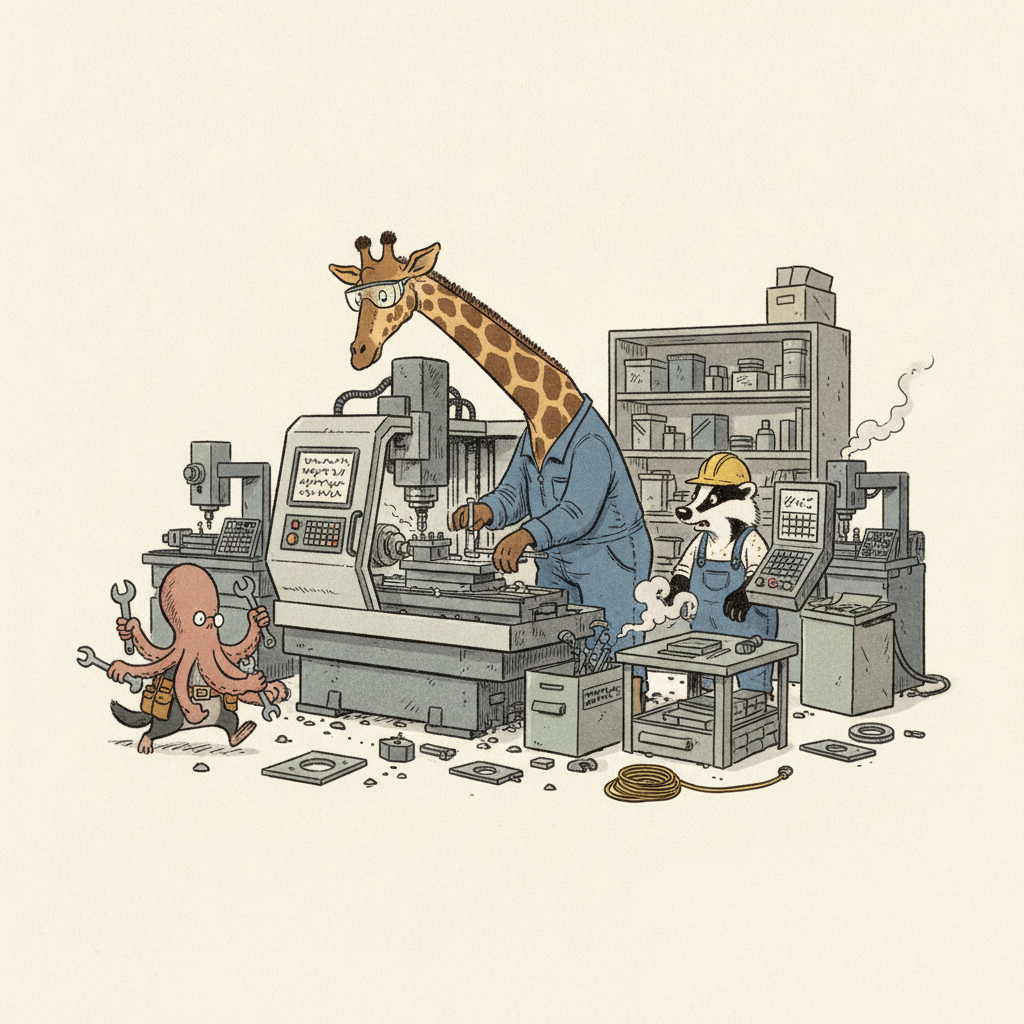
This is a CNC precision machine shop operating in the North Tampa Bay region of Florida, in business for roughly 27 years. The company produces precision machined components and parts, the kind of work that typically serves a mix of industrial, aerospace, medical device, and general manufacturing customers in a regional market. With $6.2M in revenue and $1.4M in EBITDA, it runs at roughly a 23% EBITDA margin, which is strong for a job-shop CNC operation and signals either differentiated capabilities, long-tenured customers, or disciplined cost control.
The listing is marketed as relocatable, which suggests the goodwill and customer relationships travel with the equipment rather than being tied to a specific location or a non-transferable facility lease. For a buyer, that is both an opportunity and a flag: it implies the asset value sits heavily in the machinery and the book of accounts rather than in a fixed physical plant. At $5.5M asking against $1.4M EBITDA, the headline multiple is about 3.9x EBITDA (or 3.24x on the $1.7M SDE figure), which is in the reasonable range for a durable machine shop with this kind of cash flow.
The real story here is a seasoned operation with real hard assets. CNC equipment packages at this revenue level routinely carry hundreds of thousands to over a million dollars in machine value, which means a meaningful share of the purchase price is backed by tangible, resaleable collateral. That matters for both financing and downside protection.
Why we like it
- Earnings quality is attractive for a machine shop: $1.4M EBITDA on $6.2M revenue is roughly a 23% margin, well above the typical low-to-mid-teens for job-shop CNC work. That spread suggests either sticky repeat customers, specialized tolerances competitors cannot easily match, or genuinely tight operations, and all three are worth paying for.
- The business has 27 years of operating history, which is a powerful signal in precision manufacturing where qualification cycles are long and customers do not switch suppliers casually. Longevity like this usually means approved-vendor status, proven quality systems, and relationships that would take a new entrant years to replicate.
- The deal includes a substantial CNC equipment package, which anchors the purchase price in tangible, resaleable assets rather than pure goodwill. That hard-asset backing materially improves your downside protection and makes the deal far more financeable through SBA or equipment-backed lending.
- At 3.9x EBITDA (3.24x SDE), the price is grounded and leaves room for a leveraged return, especially if a buyer can bolt on capacity utilization or push into higher-margin part families. This is boring, cash-generative manufacturing, not a hype asset, and that is exactly the kind of durable cash flow that compounds.
How to improve it
- Pull the full customer concentration report in the first 30 days and, if any single account exceeds 15-20% of revenue, immediately start diversifying the book. Add two or three new approved-vendor relationships in adjacent industries to blunt the risk that one lost contract cuts cash flow in half.
- Measure true machine utilization and shop throughput, because most job shops run equipment at 50-60% of theoretical capacity. Adding a second shift or better scheduling software can lift revenue 20-40% on the same asset base with minimal incremental capex, which drops almost entirely to EBITDA.
- Audit the quoting and pricing process within the first quarter. Many legacy machine shops underprice on habit and never reprice for inflation, so a disciplined cost-plus model with current material and labor rates can add several margin points quickly.
- Invest in quality certifications if the shop lacks them, such as AS9100 for aerospace or ISO 13485 for medical devices. These credentials unlock higher-margin, longer-run work and raise the switching cost for existing customers, directly increasing both revenue and enterprise value at exit.
- Document tribal knowledge before the seller leaves, since 27-year shops run heavily on the owner's head: setups, fixtures, customer quirks, and vendor terms. Building a basic operations manual and cross-training key machinists de-risks the transition and protects the margin you are paying for.
- Explore a CRM and outbound sales motion, because most shops this size take all their work inbound through word of mouth. Even one dedicated salesperson calling on manufacturers within a 100-mile radius can meaningfully expand the pipeline and smooth out revenue lumpiness.
- Review the equipment list for aging machines nearing end of life and build a staged capex plan. Replacing one or two tired machines with newer multi-axis units can cut cycle times, expand the part envelope you can quote, and reduce unplanned downtime that silently eats margin.
Diligence notes
- Reconcile the two headline profit figures: the listing shows $1.7M SDE and $1.4M EBITDA, so confirm exactly what add-backs bridge the gap and whether the $1.4M is a clean, defensible number. Scrutinize any owner compensation, personal expenses, or one-time items, because the multiple you are really paying depends entirely on which figure holds up.
- Demand a detailed customer concentration and contract analysis covering at least the last three years of revenue by account. A machine shop's value evaporates if one or two customers drive most of the work and have no long-term commitment, so quantify churn, backlog, and the renewal cadence of the top accounts.
- Get an independent appraisal of the CNC equipment package, including age, maintenance history, hours, and remaining useful life of each machine. The hard-asset value underpins both your financing and your downside, so verify that machines are owned free and clear and not approaching expensive replacement.
- Probe the 'relocatable' claim carefully, because moving a machine shop is expensive, disruptive, and risks losing skilled machinists who may not follow. Understand the current lease terms, local labor pool, and whether relocation is a genuine option or just marketing language that masks a location problem.
- Assess the workforce, since precision machining depends on experienced CNC operators and programmers who are hard to replace in a tight labor market. Review headcount tenure, wage rates, key-man risk, and whether the seller's departure takes critical programming or customer knowledge out the door.
- Verify quality systems, certifications, and any regulatory or audit history that governs the shop's ability to serve its customer base. Lapsed certifications or quality issues can quietly disqualify the shop from its best-paying work and would directly impair the margins you are underwriting.
Source
- Temperature-Controlled Trucking Company, Cold-Chain Carrier (Relocatable, CA)
- Precision Metal Component Manufacturer, 50-Year Michigan Machine Shop
- North Texas I&I Chemical Manufacturer, 38-Year Wholesale Blender & Co-Packer
- Packaging & Automation Systems Integrator, Northeast US Dual-Entity
- Military Uniform Manufacturer, HUBZone DoD Textile Contractor
- Agricultural Inputs Maker - Proprietary Crop Nutrient Formulations
Want the full analysis on every deal? Unlock the complete platform with Accredited Pro to screen live listings and read our operator-level writeups.