What Buying a Business Actually Looks Like: Inside a 13-Month Off-Market Search
TL;DR:
- Andrew Kurzrok, a manufacturing executive, spent 13 months searching before buying Hopewell Sheet Metal Manufacturing, a 45-year-old family business in Hagerstown, Maryland.
- He found it by cold-calling owners, not through a business broker.
- He closed in September 2025 with SBA financing and more equity than the minimum required.
- The searcher's rule of thumb: you look at 100 to 1,000 businesses to close one.
- The playbook is simple and repeatable: define a buy box, source off-market, build trust with the owner, then get the deal done.
No magic. No secret handshake. Just knowing what you want, finding it before everyone else does, and building enough trust to get the deal across the finish line.
Who bought Hopewell Sheet Metal, and why leave a good corporate job?
It's not often you get a behind-the-scenes look at how a deal actually gets done. Forbes' series The Pursuit gave us one, and it follows a playbook we see over and over again with Accredited members.
The buyer is Andrew Kurzrok. Before the deal he was a mid-level executive at Amphenol Sensors, on the road more than 200 days a year. When his wife became pregnant with their first child in 2023, he decided the travel had to end. He wanted to stay in manufacturing, which he knew, and sleep in his own bed.
The business is Hopewell Sheet Metal Manufacturing in Hagerstown, Maryland. It fabricates HVAC ductwork and other sheet metal out of a roughly 30,000 square foot shop, and the Horn family had run it for 45 years. The average employee had been there about 17 years. No third-generation family member wanted to take over.
That is the textbook Silver Tsunami setup: a profitable, boring, essential business with a retiring owner and no succession plan. Somewhere between 2.3 and 3 million boomer-owned businesses are expected to change hands this decade. The hard part is not that they don't exist. The hard part is finding the right one and earning the owner's trust.
Step 1: What is a buy box, and how did Kurzrok build his?
A buy box is a written definition of the business you will buy: industry, size, geography, deal structure, and the role you will play. It is the filter that lets you say no to 99% of deals in seconds.
Kurzrok's buy box, reconstructed from the Forbes feature and his podcast interviews:
| Criteria | Kurzrok's choice | Why it mattered |
|---|---|---|
| Industry | Manufacturing | Matched his years as a manufacturing executive |
| Geography | Within driving distance of home outside Washington, DC | The whole point was to stop traveling |
| Owner situation | Retiring founder or family, no successor | Motivated seller, real reason to sell |
| Revenue quality | Transferable customer relationships | Revenue that survives the owner leaving |
| Workforce | Tenured, skilled team | The team's expertise is the real asset |
| Financing | Self-funded with SBA debt | Keep control and the upside, no investor committee |
| Buyer role | Full-time owner-operator | He runs it; no absentee model |
Two things stand out. First, he picked an industry where he had an unfair advantage, but not a narrow one. He has said the business has to interest you, but you should not limit yourself to the exact product you made before. Second, he cared about whether revenue would transfer, not just how big it was. A business where customers buy from the owner personally is a job you are buying, not an asset.
Step 2: How do you find a business to buy that isn't listed for sale?
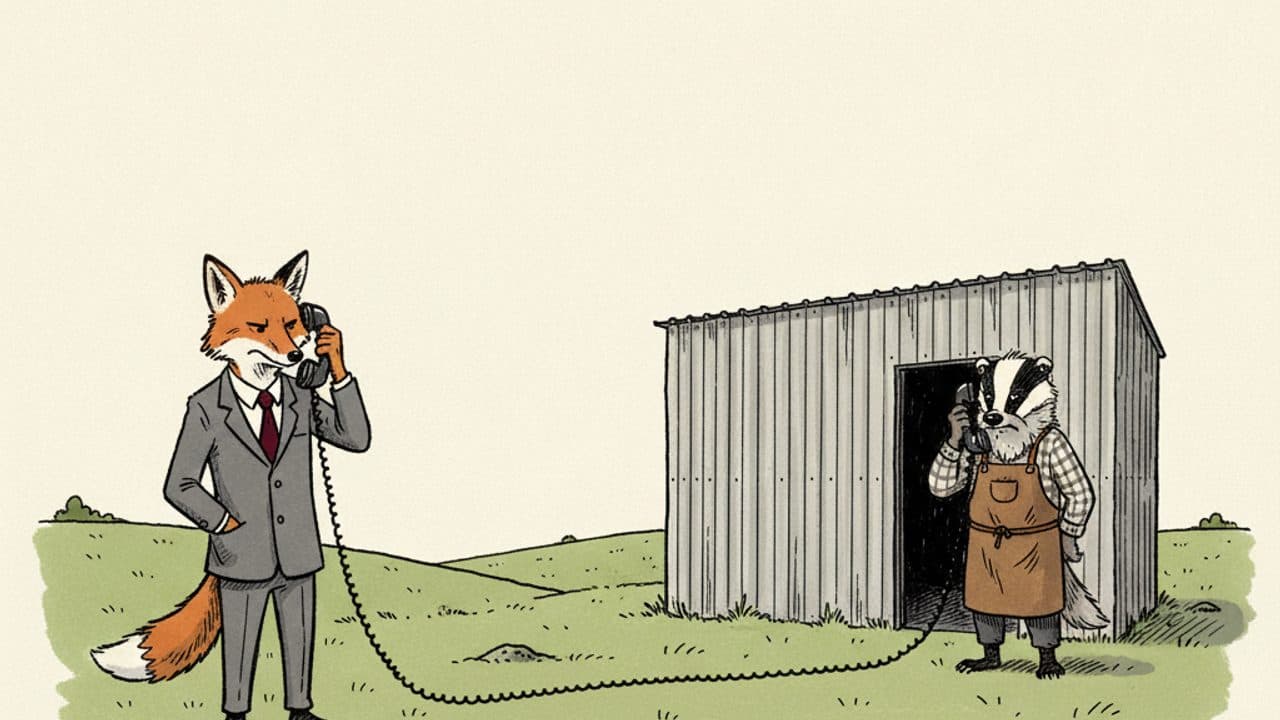
You go to the owners directly. Kurzrok's 13-month search ran on cold calls, not broker listings. He found Hopewell through that direct outreach.
The math explains why. Searchers commonly estimate that you look at somewhere between 100 and 1,000 businesses to close one deal, and the Kurzroks evaluated hundreds of local companies. If you only see what brokers list, your top of funnel is whatever every other searcher is also bidding on. Going direct means:
- Less competition. You are often the only buyer in the conversation.
- Better owner fit. You approach owners who match your buy box instead of whoever happened to list this quarter.
- Earlier access. You meet owners a year or two before they would have called a broker.
The tradeoff is volume and patience. Most owners will say not now, and many will not answer at all. The searchers who win treat outreach as a system: a list built from the buy box, a consistent cadence across calls, letters, and email, and notes on every conversation so a "maybe in two years" turns into a deal in two years. Our off-market outreach guide covers how to run that cadence.
This is the number one way Accredited members use the platform. Accredited Pro's off-market sourcing finds owners that match your buy box, and Outreach sends personalized letters to that list by First Class mail. Every owner you contact lands in a pipeline, so the "maybe in two years" is still there in two years. On the listed side, on-market sourcing dedupes 12 marketplaces into more than 65,000 unique businesses, so you can rule out what's already for sale before you start dialing.
Step 3: Why does trust with the seller matter so much?
Because in an off-market deal, the owner is choosing a person, not accepting the highest bid. Nobody is running an auction. The owner is deciding who gets the business their family built and the jobs of people they have worked beside for decades.

For Hopewell, that meant David Horn handing a 45-year-old family company and a team with roughly 17 years of average tenure to an outsider. What earns that handoff:
- A credible story. Kurzrok came from manufacturing and could talk about the work, not just the numbers.
- A plan for the people. Owners of legacy businesses ask what happens to their employees before they ask about price.
- Respect for what they built. Leading with the multiple on the first call is how you end the conversation.
- Time. Trust builds across many conversations, site visits, and small promises kept before an LOI.
This is also why off-market deals often close on better terms for both sides. A seller who trusts the buyer is more open to a seller note, a transition period, and a realistic diligence timeline.
Step 4: How did he finance and close the deal?
Kurzrok ran a self-funded search and closed in September 2025 with SBA financing. He weighed the independent sponsor route, where outside investors fund the deal and take a large share of the upside, and chose to own it himself.
One detail worth copying: he deliberately put in more equity than the minimum. Under SBA SOP 50 10 8.1, a first-time 7(a) acquisition requires a 10% equity injection that cannot be reduced. Putting in more lowers monthly debt service, which gives a first-time owner room to absorb a bad quarter without the business going under.
The purchase price and multiple have not been disclosed.
The close is where most searches stall. The usual sequence:
- Indication of interest, then letter of intent with price, structure, and exclusivity.
- Quality of earnings and financial diligence.
- SBA lender underwriting, appraisal, and approval.
- Legal: purchase agreement, seller note, non-compete, transition terms.
- Close, then the seller's transition period.
Trust built in step 3 is what keeps the seller at the table when diligence turns up surprises, and it always does.
Off-market vs. broker deals: which is better for first-time buyers?
Neither wins on every axis. Most successful searchers run both: brokered deals for volume and pattern recognition, off-market outreach for the deals nobody else sees. If you are working the brokered side, here is where businesses are listed for sale.
| Factor | Off-market (direct to owner) | Brokered listing |
|---|---|---|
| Competition | Often the only buyer | Multiple bidders, sometimes dozens |
| Price | Negotiated one-on-one | Pushed up by a competitive process |
| Deal prep | Little or none; you may build the financials with the owner | Packaged CIM and financials |
| Speed to first conversation | Slow; most owners are not ready yet | Fast; seller is ready now |
| Seller motivation | Varies; you have to find out | Confirmed, they listed |
| Relationship with seller | Built directly from day one | Filtered through the broker |
| Effort per closed deal | High volume of outreach | High volume of LOIs and lost bids |
| Best for | Patient buyers with a tight buy box | Buyers who need volume and comps |
What does owning the business look like after closing?
Less glamorous than the deal. Kurzrok's biggest surprise in the first 30 days was HR paperwork, not customers or machines. The business itself has stayed stable since he took over.
His early priorities, per his own interviews:
- Keep the team. With 17 years of average tenure, the people are the institutional knowledge.
- Modernize management, not the trade. He plans to bring in EOS (the Entrepreneurial Operating System) and lean manufacturing practices.
- Keep the positioning. Hopewell competes on best value, a position he knew from the connector industry.
That is the pattern with good acquisitions of legacy businesses: don't break what works in year one, and add the management systems the founder never needed.
Frequently asked questions
How long does it take to buy a business?
Plan on 12 to 24 months from starting your search to closing. Andrew Kurzrok's search for Hopewell Sheet Metal took 13 months. After a signed LOI, budget months rather than weeks: SBA lenders require a quality of earnings report, which alone takes three to four weeks, before underwriting and legal work even start.
How many businesses do you have to look at before buying one?
Searchers commonly estimate 100 to 1,000 businesses reviewed to close a single deal. Most are ruled out by the buy box in minutes. A handful reach a real conversation, and one reaches close.
What is a buy box when buying a business?
A buy box is a written set of criteria for the business you will buy: industry, size, geography, owner situation, financing, and your role. It lets you reject mismatched deals fast and tells owners and brokers exactly what you are looking for.
How do you find a business for sale that isn't listed?
Contact owners directly by phone, letter, or email, targeting businesses that fit your buy box. Retiring owners without a successor are the most common sellers. Kurzrok found Hopewell through cold outreach rather than a broker.
Can you buy a business with an SBA loan?
Yes. The SBA 7(a) program finances business acquisitions, and a first-time acquisition requires at least 10% equity from the buyer under SOP 50 10 8.1. Kurzrok used SBA financing and put in more equity than the minimum to lower his debt payments.
Is it better to buy a business off-market or through a broker?
Off-market deals usually mean less competition and a direct relationship with the seller, but they take more outreach. Brokered deals are faster to access but more competitive. Most successful buyers pursue both.
Run the same playbook
Buy box, off-market sourcing, trust, close. Kurzrok's version took 13 months and a lot of phone calls. Accredited Pro is built to compress the first two steps: on-market sourcing across 12 marketplaces, off-market owner discovery, and Outreach letters to the owners you find. Start a 7-day trial of Accredited Pro.
Disclaimer
This article is for informational purposes only and is not investment, legal, tax, or lending advice. Deal details are drawn from public reporting and interviews; Accredited has no affiliation with the buyer, seller, or Hopewell Sheet Metal Manufacturing. Consult qualified advisors before acquiring a business.
Sources
- Forbes, The Pursuit: The New American Dream: Buying & Growing An Old-School Business (video description and chapters)
- M&A Launchpad Podcast: Stop Chasing Sexy Deals: Why This Buyer Chose Sheet Metal with Andrew Kurzrok
- Forbes Argentina (syndicated Forbes feature): Los millennials salen a comprar empresas a prueba de IA
- FMA member directory: Hopewell Sheet Metal Manufacturing LLC