How to Do Outreach for Off-Market Businesses: The Playbook for Getting Owners to Reply
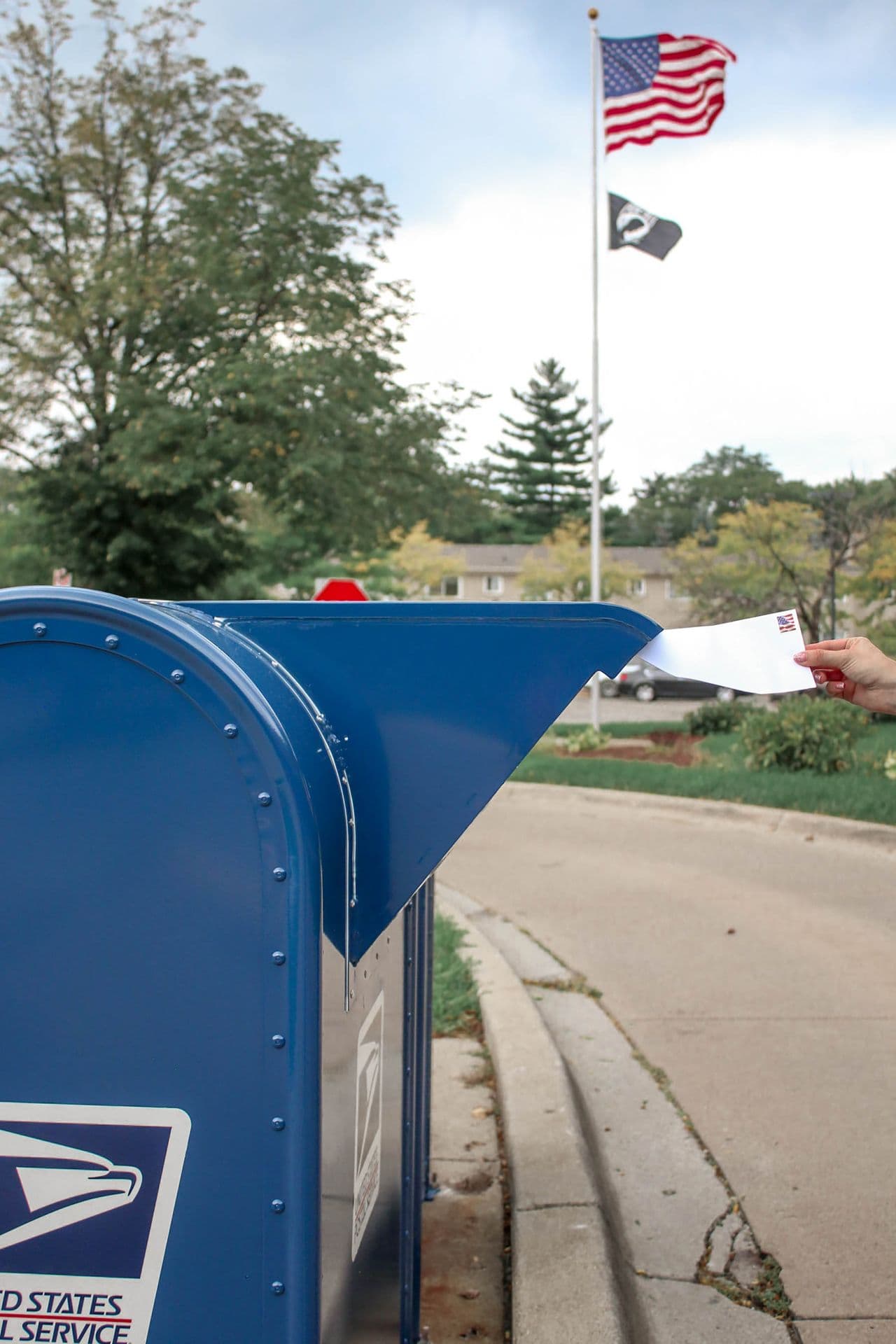
TL;DR: The best off-market deals never hit a marketplace, which means you have to go get them. The buyers winning right now are not blasting generic cold emails. They are leading with a personal, physical touch (a real letter, often with a photo and a short story about who they are), then layering on LinkedIn and email as follow-up. Direct mail to a tight, verified list consistently pulls higher response rates than cold email, and a multi-touch sequence beats any single channel. Expect to contact hundreds of owners to close one deal. Personalization, persistence, and patience are the whole game.
Why off-market outreach is worth the effort
Here is the uncomfortable truth about deal sourcing. By the time a good business shows up on BizBuySell or a broker's inbox blast, you are one of fifty buyers looking at it. The seller has a broker pushing for the highest bid. The multiple is set. Your leverage is gone before you start.
Off-market sourcing flips that. You reach the owner before they list, before there is a process, before there is competition. You are not bidding against anyone. You are having a conversation with a person who may not have even decided to sell yet.
That is the prize. The cost is that you have to do the work yourself. No broker hands you the deal. You build the list, you write the outreach, and you follow up for months. Most buyers will not do this, which is exactly why it works for the ones who will.
This guide breaks down what actually gets owners to respond in 2026, channel by channel, with the numbers to back it up and a sequence you can run starting this week.
What to expect: the off-market outreach funnel
Before tactics, set your expectations. Off-market outreach is a numbers game stacked on top of a relationship game. You need volume at the top and patience at the bottom.
For why that cohort of owners is larger than it has ever been, and why the wave has not produced the buyer's market people expected, see is the Silver Tsunami real.
Here is the shape of a typical proprietary sourcing funnel, drawn from how private equity firms and search funds report their own numbers. Yours will vary by industry, deal size, and how tight your list is, but the proportions hold up across firms.
| Stage | Volume | Conversion |
|---|---|---|
| Owners identified | 500 to 1,000 | Starting list |
| Outreach sent | 400 to 800 | 80 to 90% of list |
| Conversations or meetings | 40 to 60 | Roughly 8 to 10% reply |
| Qualified opportunities | 15 to 25 | About 40% of meetings |
| Diligence started | 3 to 5 | About 20% of qualified |
| Deals closed | 1 to 2 | 30 to 50% of diligence |
Read that top to bottom. To close one or two deals, you are realistically reaching out to several hundred owners. That sounds brutal until you realize the alternative is competing on price for picked-over listings. The funnel is wide on purpose.
The takeaway: do not judge a campaign by your first ten letters. Judge it by what happens after a few hundred touches across a few months. Sourcing rewards the patient.
The channel that quietly wins: direct mail
Everyone defaults to email because it is free and fast. That is exactly why it is crowded and why it underperforms. The owner of a profitable HVAC company or a third-generation manufacturing business gets dozens of "I'd love to buy your business" emails a year, all of which read the same and all of which get deleted.
Their mailbox, on the other hand, is nearly empty of anything personal.
A physical letter cuts through because it is rare, tangible, and obviously took effort. The data is lopsided. Industry response-rate research from the ANA (formerly the DMA) has put direct mail to prospect lists around 10 to 11% response, and mail to known contacts higher still, against cold email reply rates that now sit closer to 1 to 5%. Handwritten or handwritten-style mail gets opened almost every time. When you send to a tight, verified list of high-value targets rather than spraying a broad one, response rates in the 15 to 30% range are achievable.
That is not a marginal edge. That is a different sport.
Why it works for acquisition outreach specifically
Buying someone's business is the most personal B2B transaction there is. You are asking them to hand over a lifetime of work. A cold email signals "transaction." A real letter signals "I am a real person who took the time, and I am serious."
That reciprocity matters. When an owner can see you invested effort to reach them, they feel more obligation to at least read it and more comfortable that they are dealing with a human rather than a fund's mail-merge robot.
What the winning letter actually contains
Here is the format that works, and it is the opposite of a broker pitch. You are not leading with money or terms. You are introducing yourself as a person.
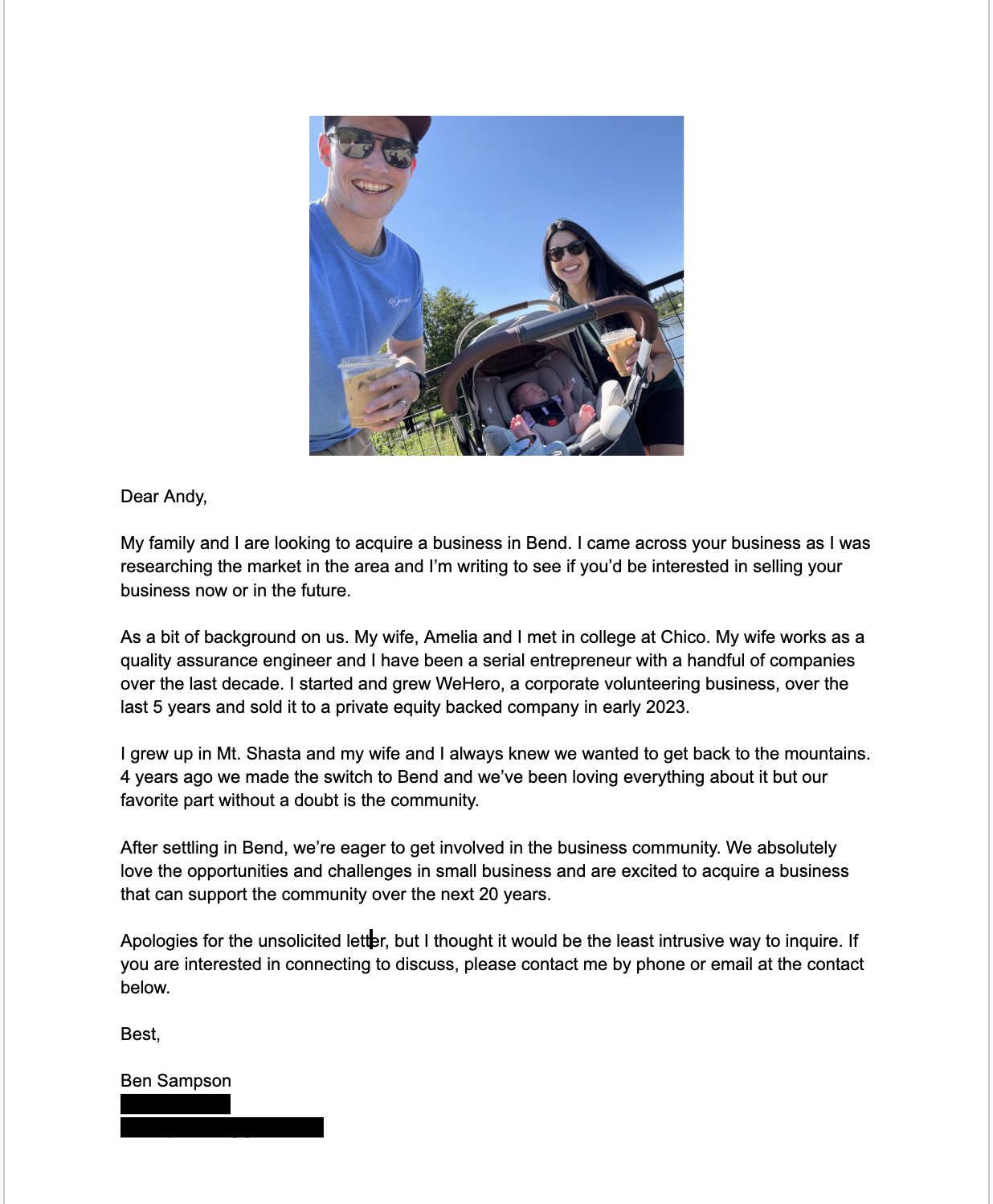
A strong off-market acquisition letter includes:
- Who you are, briefly. Your name, where you are from, what you have done. One short paragraph. Real, not corporate.
- A photo of you (and your family, if that fits you). This is the single most disarming move available. It turns an anonymous "buyer" into a neighbor. Owners who have spent thirty years building something want to know it is going to a person, not a spreadsheet.
- Why them, specifically. A genuine reason you are reaching out to this business. Not "I came across your company." Reference something real: how long they have operated, their reputation, the industry, the region. Specificity proves you are not blasting a list.
- A soft, low-pressure call to action. Not "what is your asking price." Something human. "I would love to buy you lunch, grab a coffee, or just have a quick call if any of this is of interest." You are asking for a conversation, not a deal.
- A clean, easy way to reach you. Phone, email, and your name signed at the bottom. Make the next step frictionless.
What it does not include: terms, valuation talk, urgency tactics, or anything that reads like a form. The goal of the first touch is one thing only. Start a conversation.
Keep it to one page. Make it feel like it came from a person, because it did.
Writing one letter like that is easy. Writing two hundred, each one opening with that owner's own name, is where most people stop. That is the part we built Outreach for. Pick a list, write the letter once, and every copy goes out First Class in a plain envelope with a real stamp, addressed to the owner by name. Your first five letters are on us.
Direct mail vs email vs LinkedIn vs cold call
No single channel wins outright. They each do a different job, and the buyers getting results in 2026 use them together. Here is the honest comparison.
| Channel | Typical response | Cost per touch | Best role in your sequence |
|---|---|---|---|
| Personal letter (with photo) | 10 to 30% on a tight list | $1 to $5 | First touch. Stands out, builds trust, hardest to ignore. |
| Cold email | 1 to 5% first email, up to ~20% across a full follow-up sequence | Near zero | Volume and persistent follow-up. Cheap to repeat. |
| Roughly double cold email reply rates | Free to low | Warm reinforcement. Puts a face and profile to your letter. | |
| Cold call | Low connect rate, high value when it lands | Time | Direct and fast for owners who prefer a voice. Reserve for warm or high-priority targets. |
The pattern is clear. Mail opens the door because it is rare and personal. Email and LinkedIn keep you in front of them cheaply over time. The combination outperforms any one of them, because most owners do not respond to the first touch on any channel. They respond to the third or fourth.
The sequence that ties it together
This is the part most buyers skip. They send one letter or one email, hear nothing, and quit. The owner was not offended. They were busy, and your one touch got buried.
A sequence solves that. Here is a clean multi-channel cadence built around a personal-mail first touch, the same shape that has worked across proprietary sourcing campaigns.
| Touch | Timing | Channel | Message |
|---|---|---|---|
| 1 | Week 1 | Personal letter with photo | Introduce yourself, why them, soft CTA for a coffee or call. |
| 2 | Week 1 to 2 | Send a connection request and a one-line note referencing the letter. | |
| 3 | Week 2 | Short follow-up: "Sent you a note in the mail, wanted to make sure it reached you." | |
| 4 | Week 4 | Email or LinkedIn message | Add value or a new angle. Reference the industry, a relevant note, keep it light. |
| 5 | Week 6 to 8 | Second letter or call | A different message. Restate genuine interest, no pressure. |
Two things make this work.
First, the channels reinforce each other. The letter lands. A few days later your face shows up in their LinkedIn requests. The name is now familiar, so the email a week after that gets opened instead of deleted. You have gone from stranger to "that person who keeps showing up professionally and politely."
Second, follow-up is where the replies actually come from. Analysis of large volumes of cold outreach has found that a first email might pull a reply rate around 4 to 5%, but a full sequence of follow-ups can push the cumulative reply rate to roughly 20%. The owners who ignore touch one and respond to touch four are the bulk of your pipeline. Quitting after one send throws most of your deals away.
A word on tone across all of it: persistent, never pushy. You are nurturing a relationship that may take months or even years to ripen. Plenty of off-market deals close long after the first letter, when the owner's health, family situation, or readiness finally catches up to your timing. Stay in the rotation. Stay human.
Cold email, done so it actually lands
Email is the cheapest channel and the easiest to ruin. Do it lazily and you torch your domain and waste your list. Do it right and it is the engine of your follow-up. The fundamentals that separate inbox from spam folder:
Warm up the domain first. Do not dump 300 emails out of a fresh domain on day one. Start with a handful per day and ramp gradually over a few weeks so providers learn you are legitimate. Skipping this is the fastest way to get blacklisted.
Set up authentication. SPF, DKIM, and DMARC on your sending domain are non-negotiable. They verify you are really you and keep you out of spam. This is a one-time setup with your domain host.
Verify the list. Bounces wreck your sender reputation. Reach the actual owner or majority shareholder, not a generic info@ address that gets passed around and ignored.
Personalize the open. A line that references the specific business or owner, or at least a real industry detail, lifts response meaningfully. Generic blasts get generic results. Advanced personalization can roughly double reply rates.
Keep the first email short and link-free. Avoid spam-trigger words like "cash" and "sale." No attachments or links in touch one. Subject lines under about 50 characters, clear and personal, beat clever clickbait.
Build the follow-ups in from the start. One email is not a campaign. Space your follow-ups about a week apart, reference the prior note, and add a little value each time rather than just "bumping this up."
LinkedIn, used as reinforcement not the main act
LinkedIn outreach tends to pull about double the response rate of cold email, partly because the owner can immediately see who you are. That is its strength and its job: it makes you real.
The play is simple. After your letter goes out, find the owner on LinkedIn and send a connection request with a short, genuine note. Do not pitch. Reference the letter or just express interest in their industry. Once connected, you have a low-friction channel for the lighter touches in your sequence, and your profile does the trust-building for you. Keep it professional and sparse. LinkedIn is the handshake, not the proposal.
What is working over the last twelve months
A few clear patterns have emerged across buyers and sourcing firms in the past year.
The physical touch is making a comeback precisely because everything went digital. As inboxes filled with AI-written cold emails that all sound the same, owner reply rates to email have drifted down, with one analysis of millions of messages showing cold email replies falling year over year. Meanwhile a real letter looks more exceptional than ever. The crowd ran to email, which is exactly why mail works.
AI is being used to personalize at scale, not to spray. The buyers winning are not using AI to send more generic messages faster. They are using it to research each target, find a genuine reason to reach out, and tailor the opening so it reads like a human did the homework. AI for prioritizing which owners are most likely to be ready, and for drafting a personalized first line, is the edge. AI for volume alone is noise.
Multi-channel sequences beat single-channel every time. Firms running structured cadences across mail, email, and LinkedIn report meaningfully higher reply rates than their old single-channel efforts. One sourcing operation engaged more than two thousand owners over eight months and reported reply rates more than double their previous approach by systematizing the outreach rather than relying on one-off emails.
Tighter lists beat bigger lists. A verified list of 200 owners who genuinely fit your criteria, worked with a real sequence, will out-produce a blast to 5,000 names. The cost per piece on a personal letter is only worth it if the target is worth it. Spend the effort where a single deal justifies it.
Trigger events sharpen timing. Owners approaching retirement age, businesses with succession risk, or recent industry shifts all signal readiness. Prioritizing outreach toward owners who are more likely to be ready, rather than treating every target equally, lifts conversion and respects your own time.
The mistakes that get you ignored
If your outreach is not working, it is probably one of these.
You led with money. Asking for the asking price in the first touch makes you a transaction. Lead with the person.
You sent one touch and quit. Most replies come from follow-up. One letter or one email is a coin flip you will almost always lose.
You sounded like a broker or a fund. The whole advantage of being a real buyer is that you are a real person. Generic, corporate, mail-merge language throws that away. Sound like you, not like a template.
You sprayed a giant unverified list. Bounces kill your email reputation and effort wasted on bad-fit targets is effort stolen from good ones. Tighten the list.
You were pushy. Off-market sourcing is a long game. Pressure reads as desperation and ends conversations. Patience and genuine interest keep you in the running for the deals that take a year to ripen.
Your starting move this week
Pick a tight list of 50 to 100 owners who genuinely fit what you want to buy. Write one real letter: who you are, a photo, why them, and a soft invitation to coffee or a call. Send it. Connect on LinkedIn a few days later. Follow up by email the week after. Then do it again next month.
If building that list by hand is the thing stopping you, off-market sourcing finds businesses that match what you are looking for and digs up the owner's name and mailing address, and Outreach puts the letters in the post.
That is the entire playbook. The buyers closing off-market deals are not smarter than you. They are just willing to do the personal, patient work that everyone else skips. The owner is waiting for one buyer who feels like a person instead of a pitch. Be that buyer.
Disclaimer: This article is for informational purposes only and does not constitute legal, tax, or investment advice. Outreach and acquisition activity may be subject to anti-spam, privacy, and securities regulations depending on your jurisdiction and approach. Consult a qualified attorney before launching outreach campaigns or pursuing an acquisition.