Read the full deal writeup
Sign up for a free Accredited account to read the editorial writeup, financials, and broker contact for this deal.
Get Free AccessFull Editorial Writeup
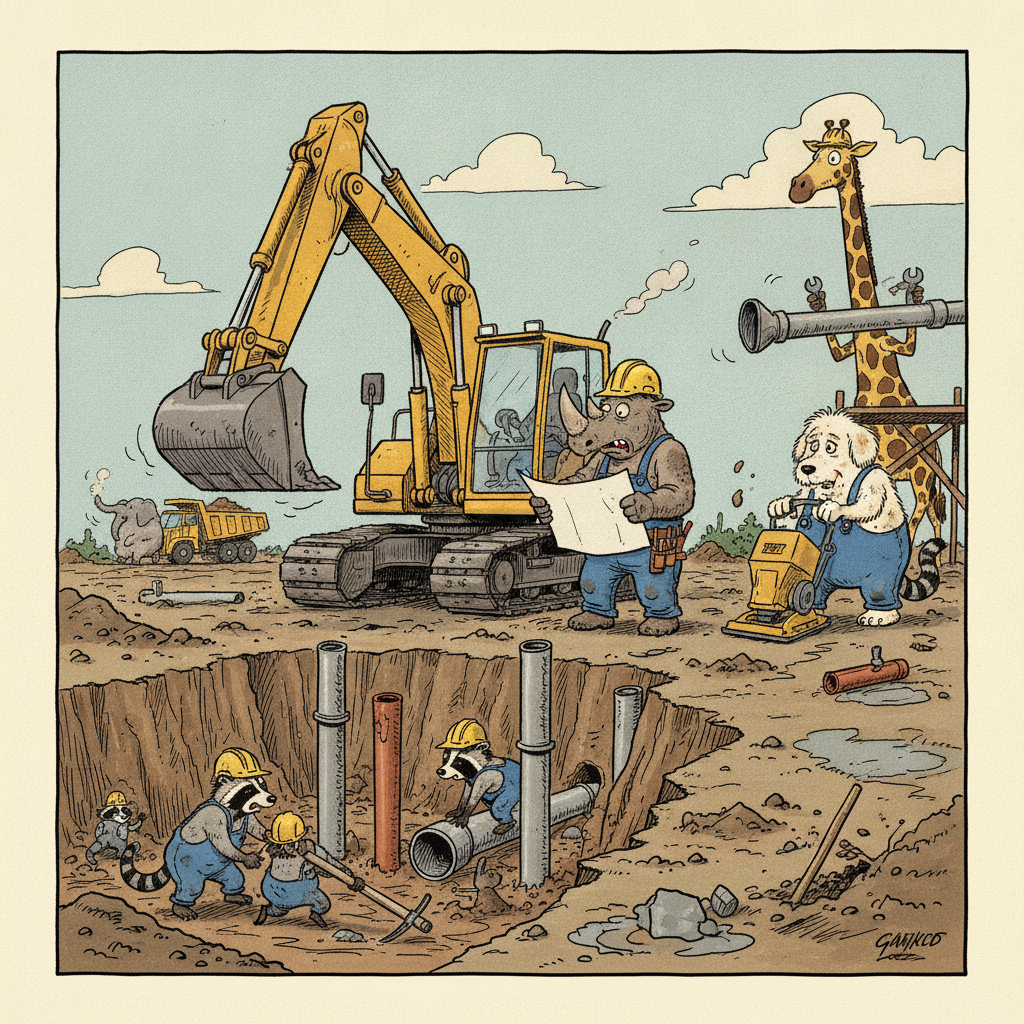
Founded in 2009, this is an excavation and pipeline contractor built around intricate heavy civil work, with a specialty in subterranean utility infrastructure: natural gas distribution networks, water mains and services, sewer systems, and agricultural irrigation lines. Beyond pipelines, the business handles earthwork, grading, road and heavy highway construction, mining reclamation, and mine site development. It operates across a three-state footprint in the rural intermountain west, a geography that most large contractors ignore and most small ones cannot service at scale.
The moat here is geographic and relational rather than technological. In remote, underserved markets, decades of community relationships translate into a high proportion of invitation-only awards, which keeps the business out of the pure low-bid meat grinder that crushes margins in commodity civil work. Revenue of $7.94M against $1.58M of cash flow implies roughly a 20 percent owner-earnings margin, which is strong for heavy civil and signals genuine pricing power and disciplined project selection.
The operation runs on a tenured 40-person W-2 workforce, a $6.2M certified-appraised equipment fleet owned free and clear, and bonding capacity to $10M. Revenue is anchored by a three-year utility master contract running through 2027, which gives a buyer visible cash flow rather than a bare backlog. Ownership is retiring and has offered to support a structured transition.
Why we like it
- Earnings quality is real: $1.58M of cash flow on $7.94M of revenue is about a 20 percent margin, which is uncommon in heavy civil where low-bid competition typically compresses returns to single digits. The invitation-only award mix explains the premium and suggests these earnings are not a one-year fluke tied to a single mega-project.
- The moat is durable and hard to replicate: decades of relationships in remote intermountain west markets produce work that never goes to open bid, and a $10M bonding capacity plus a licensed, tenured 40-person crew are barriers that a new entrant cannot buy quickly. Rural utility infrastructure is not a market that attracts national roll-ups, so competitive pressure stays low.
- The tailwinds are structural: aging natural gas, water, and sewer infrastructure across the rural west needs replacement regardless of the economy, and federal and state utility spending on distribution and reclamation is durable through downturns. The three-year utility master contract through 2027 converts that demand into contracted revenue rather than hopeful backlog.
- The operator advantage is a free-and-clear $6.2M appraised fleet included in the deal, which means a buyer inherits the hard assets that would otherwise cost years and capital to assemble. Combined with the retiring owner's transition support, this is a rare chance to step into a bonded, staffed, equipment-heavy contractor rather than build one from scratch.
How to improve it
- Map the revenue concentration behind the 2027 master contract and begin diversifying the customer base immediately. Target two or three additional utility or municipal master service agreements so the business is not exposed to a single renewal decision when the current contract expires.
- Institutionalize the founder's relationships before the transition window closes. Assign specific business development ownership to the estimating and project management leads, document the invitation-only client contacts, and formalize referral and pre-qualification pipelines so awards do not walk out the door with the seller.
- Push utilization on the $6.2M fleet by tracking equipment hours, idle time, and cost per machine. If certain assets sit idle for large parts of the season, either redeploy them into rental income during off-peak months or sell underused units to free up capital.
- Tighten job costing and change-order discipline. Heavy civil profit leaks through underbid rock, dewatering, and scope creep, so implement per-project margin tracking and a formal change-order approval process to protect the 20 percent cash flow margin as volume grows.
- Expand bonding capacity beyond the current $10M ceiling by strengthening the balance sheet and building a surety relationship early. Higher bonding unlocks larger and more profitable projects that competitors in these rural markets simply cannot bid on.
- Build a succession bench for the field superintendents and key operators. In a 40-person shop, the loss of two or three senior people can stall projects, so create wage progression, retention bonuses, and cross-training to reduce key-person risk on the crew side.
Diligence notes
- Scrutinize the 2027 utility master contract in full: pricing mechanism, minimum volume commitments, termination and renewal terms, and how much of the $7.94M revenue it actually represents. A single contract anchoring the business is both the strongest asset and the biggest concentration risk in this deal.
- Verify the $6.2M equipment appraisal against real-world condition, hours, and remaining useful life. Get an independent inspection, confirm the fleet is truly free and clear with no liens, and estimate near-term capital replacement needs that could offset the cash flow.
- Normalize the $1.58M cash flow with a quality-of-earnings review. Confirm owner add-backs are legitimate, check whether revenue and margins are consistent across the last three to five years, and separate recurring master-contract work from lumpy one-time mining and reclamation projects.
- Pressure-test the bonding relationship and how it survives a change of ownership. Bonding is often personally tied to the current owner's track record and balance sheet, so confirm a buyer can maintain the $10M capacity post-close or the pipeline of larger jobs disappears.
- Assess key-person and workforce risk in a tight rural labor market. Understand how much revenue depends on the retiring owner's personal relationships, whether the 40-person crew is stable, and what wage inflation or turnover could do to margins going forward.
- Clarify the real estate situation, since the facility sits on roughly 6 acres and is listed as an owned building but the asking price and whether real estate is included are not disclosed. Determine if the property conveys, is leased back, or must be purchased separately, as it materially changes the total capital required.
Source
- Nationwide Contracting Distribution & Service Co - Multi-Service Construction Platform
- Established CT Survey & Civil Engineering Firm, 100-Year New Haven County Practice
- Utah Commercial HVAC Contractor - 27 Years
- Established Electrical Contractor, 10+ Year Eastern Massachusetts Commercial Specialist
- Established Infrastructure Architectural Firm, 50-Year Houston SLED Practice
- Multifamily Tenant-Turn General Contractor, San Diego County
Want the full analysis on every deal? Unlock the complete platform with Accredited Pro to screen live listings and read our operator-level writeups.