Read the full deal writeup
Sign up for a free Accredited account to read the editorial writeup, financials, and broker contact for this deal.
Full Editorial Writeup
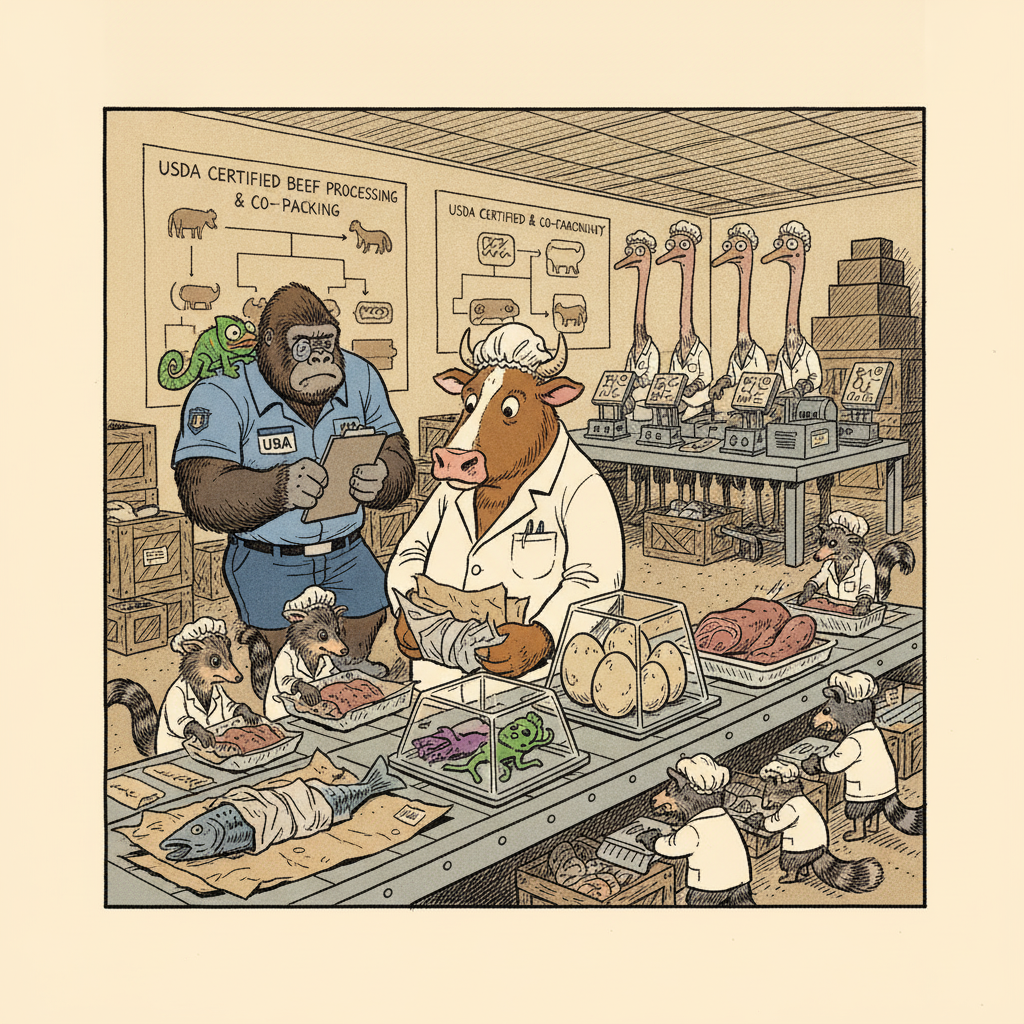
This is a USDA-certified specialty food co-packer based in the Mountain West, specializing in beef-based product manufacturing for third-party brands. The company operates as a contract processor, offering custom production, co-packing, and private-label solutions to emerging brands, national companies, and foodservice distributors. Its positioning in the clean-label and no-seed-oil movement, combined with a focus on whole-food, health-forward products, aligns it with the keto, paleo, carnivore, and ancestral health consumer trends driving demand in specialty protein.
The financial profile is the standout: roughly $6.44M in revenue against $3.45M in adjusted EBITDA, implying a margin north of 53 percent. That is extraordinary for food manufacturing, where mid-teens EBITDA margins are typical. Either this business has a genuinely differentiated niche with pricing power, or the add-backs behind "adjusted EBITDA" deserve heavy scrutiny. The listing includes $2.2M of FF&E in the asking price and references owned real estate, though the asking price itself is not disclosed.
As a co-packer, the business earns from ongoing production relationships with repeat customers rather than one-off transactions, which gives it a quasi-recurring revenue character tied to its clients' own volume. The buyer pool is explicitly framed as strategic acquirers in specialty foods and PE groups in food manufacturing, which signals the seller expects a sophisticated, multiple-driven process rather than a main-street sale.
Why we like it
- The margin profile is the headline: $3.45M EBITDA on $6.44M revenue is a 53 percent margin, which is roughly triple what a normal food co-packer earns. If that margin is real and durable, this is a genuinely differentiated niche operation with pricing power rather than a commodity processor competing on cost.
- Beef-based protein and clean-label products sit in a category consumers keep buying through downturns, and the no-seed-oil and ancestral-health tailwinds (keto, paleo, carnivore) are structural rather than fad-driven. USDA certification is a real regulatory moat that keeps out casual competitors and makes the production capacity hard to replicate quickly.
- The co-packer model creates sticky, repeat revenue because once a brand qualifies a processor and locks in recipes, pack-outs, and USDA-certified capacity, switching costs are high and reorders flow by default. A diverse customer base spanning emerging brands, national companies, and foodservice distributors spreads concentration risk across channels.
- The business comes with $2.2M of included FF&E and owned real estate, meaning a buyer acquires hard productive assets rather than just goodwill. For a strategic or PE acquirer, the certified facility plus equipment package shortens time-to-capacity and provides collateral for acquisition financing.
How to improve it
- Audit and normalize the adjusted EBITDA line immediately, separating true owner add-backs from aggressive adjustments, because a 53 percent margin invites skepticism and the real post-close cash flow determines everything about the price you should pay. Build a defensible quality-of-earnings view before committing capital.
- Map customer concentration and move the top accounts onto multi-year supply agreements with volume commitments and pricing escalators. Converting informal co-pack relationships into contracts protects the revenue base and materially increases the multiple at your own eventual exit.
- Measure plant utilization and identify unused shifts or capacity, then fill it with new co-pack clients riding the same clean-label and no-seed-oil wave. Incremental volume on an already-built USDA facility drops almost entirely to the bottom line given the fixed-cost base.
- Lock in beef supply through forward contracts or vendor diversification, since protein input costs are the single largest swing factor in this margin and an uncovered spike could erase the attractive economics. Hedging or contracted pricing stabilizes the margin story that justifies the valuation.
- Develop a direct outbound sales function targeting emerging DTC and challenger food brands that need a certified co-packer but lack capital for their own plant. This is a classic underinvested area in owner-run manufacturers and a repeatable growth lever for new pack-outs.
- Pursue additional certifications (organic, grass-fed, non-GMO, SQF) to expand the addressable client roster and command premium per-unit pricing. Each certification unlocks a new tier of brands willing to pay more for compliance they cannot easily get elsewhere.
- Install monthly financial and operational KPIs (yield, scrap, labor per unit, on-time fill rate) if they are not already in place. Tight operating discipline both protects the margin and creates the reporting package a future institutional buyer expects.
Diligence notes
- Scrutinize the adjusted EBITDA bridge line by line, because a 53 percent margin in food manufacturing is far outside the norm and the gap between a clean number and an inflated one could be seven figures. Demand the tax returns, audited or reviewed financials, and a reconciliation of every add-back.
- Quantify customer concentration and contract status, since co-packers often depend on a handful of brands and the loss of one large client can cut EBITDA sharply. Ask how much revenue sits under written agreements versus informal purchase orders and how long the top accounts have been customers.
- Clarify the real estate situation and whether the owned building is included in the undisclosed asking price or sold separately, as this changes both the effective multiple and the financing structure. Get the property value, condition, and any environmental or USDA facility compliance issues on record.
- Investigate beef input cost trends and supplier relationships, because protein price volatility directly drives the margin and a recent favorable buying window may be flattering the trailing numbers. Review historical cost of goods and gross margin by period to see how stable the economics actually are.
- Verify the USDA certification is in good standing, fully transferable, and free of recent violations or corrective action, since the certification is the core moat and any lapse would gut the value proposition. Pull inspection history and confirm the facility passes current standards.
- Determine the owner's role and whether key relationships, recipes, or technical knowledge walk out the door at close, as the listing discloses no transition support. Understand depth of management and staff retention risk before assuming the margin survives ownership change.
Source
- Precision Metal Component Manufacturer, 50-Year Michigan Machine Shop
- Temperature-Controlled Trucking Company, Cold-Chain Carrier (Relocatable, CA)
- Fetal Bovine Serum Manufacturer & Distributor, 25-Year Life Sciences Supplier
- Packaging & Automation Systems Integrator, Northeast US Dual-Entity
- Specialty Painting & Powder Coating, 40-Year Oregon Architectural Finisher
- Plastic Injection Molding, 32-Year Colorado Short-Run Shop with DoD Contracts
Want the full analysis on every deal? Unlock the complete platform with Accredited Pro to screen live listings and read our operator-level writeups.