Read the full deal writeup
Sign up for a free Accredited account to read the editorial writeup, financials, and broker contact for this deal.
Get Free AccessFull Editorial Writeup
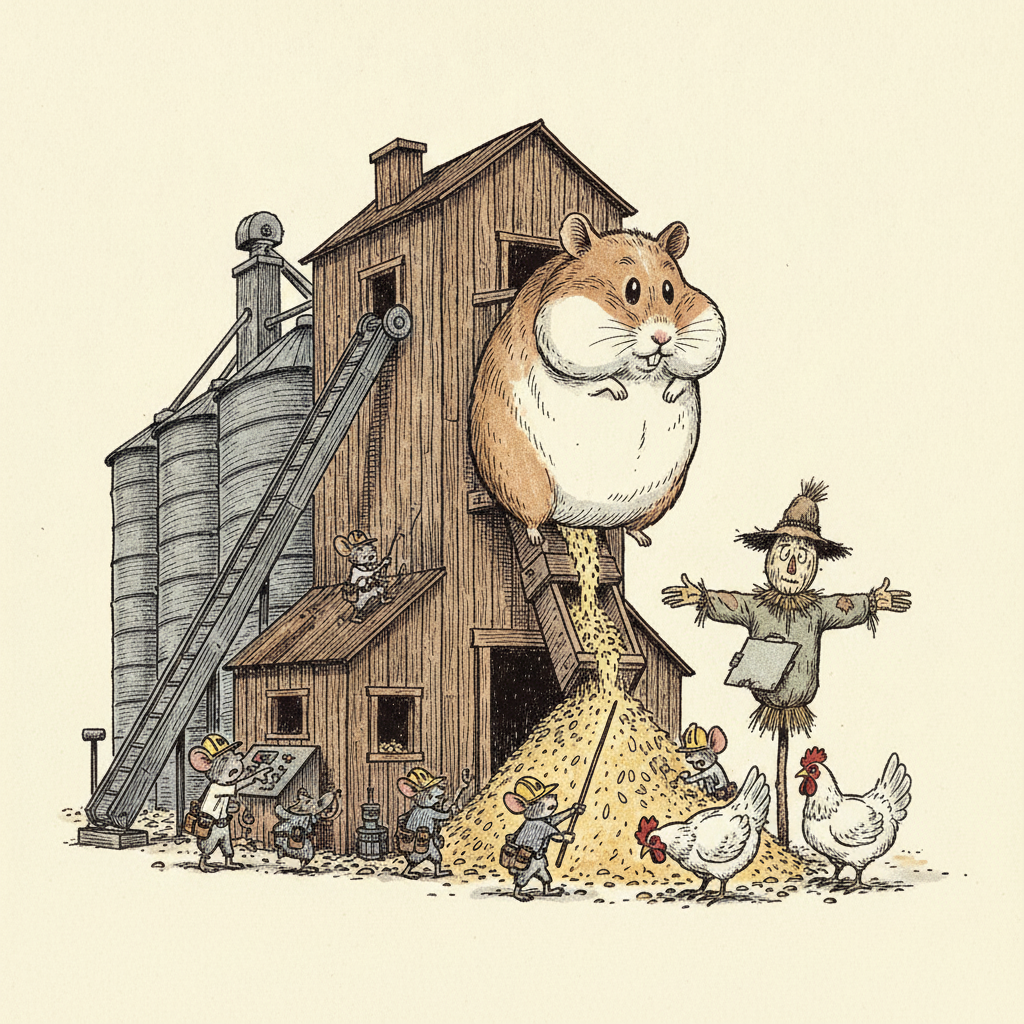
This is a family-owned grain elevator in Central Illinois that has operated continuously since 1961, serving local farmers with grain intake, drying, storage, and merchandising. With 1.4 million bushels of storage capacity, the operation sits in the heart of the US Corn Belt, one of the most productive agricultural regions on earth. The asking price of $3M includes both the operating business and the real estate, which is significant given the fixed-asset intensity of grain handling.
The headline number that stands out is $26M in revenue against $600K in cash flow, a roughly 2.3% cash flow margin. That is not a red flag, it is the nature of grain merchandising: revenue is inflated by the pass-through value of the grain itself, and margins live on spreads, storage fees, drying charges, and basis trading. The right lens here is not revenue margin but return on the physical asset base and the durability of farmer relationships built over 65 years.
At 5x cash flow with real estate and a full elevator complex included, the buyer is acquiring hard, hard-to-replicate infrastructure in a market with high barriers to entry. New elevator capacity is enormously expensive to permit and build, and the incumbent relationships with surrounding farms are sticky by geography. This is a boring, essential, infrastructure-heavy cash machine sitting in the middle of American agriculture.
Why we like it
- Earnings quality is grounded in physical throughput rather than fads: farmers must move grain every harvest, and this elevator has been the local option since 1961. The $600K cash flow is thin against $26M revenue, but that is expected because grain value passes through the P&L, so the real earnings driver is storage and handling spread on a paid-for asset base.
- The moat is geography and replacement cost. Building 1.4M bushels of new capacity would cost far more than the $3M asking price once you factor land, permitting, and construction, and the 65-year relationship base with surrounding farms is nearly impossible for a new entrant to replicate.
- Grain handling is about as recession-resistant as it gets. People eat and livestock feeds in every economic cycle, corn and soybeans keep coming out of Central Illinois fields, and the elevator earns on volume regardless of consumer sentiment or discretionary spending trends.
- The operator advantage is real for a buyer who understands basis trading and merchandising. A thin 2.3% margin means small improvements in grain marketing, drying utilization, and storage turns flow straight to the bottom line, so an operator who sharpens the trading desk can move cash flow meaningfully.
How to improve it
- Audit the grain merchandising and basis strategy in the first 90 days. On $26M of throughput, even a modest improvement in average basis captured or hedging discipline can add six figures of margin without any capital investment.
- Maximize storage and drying revenue by reviewing capacity utilization across the crop calendar. Idle bins during off-season and under-priced drying charges are common margin leaks at family-run elevators, and re-pricing these services against regional comps can lift the take.
- Formalize customer relationships with volume commitments or preferred-pricing agreements. Sixty-five years of goodwill is valuable but fragile through an ownership transition, so locking in the top farmer accounts early protects the throughput base.
- Evaluate adjacent revenue like input sales, agronomy services, or trucking/logistics for delivered grain. Elevators often sit on the ability to cross-sell seed, fertilizer, and hauling, which can diversify away from pure grain spread.
- Invest selectively in throughput speed: faster unload pits, additional dump capacity, or expanded drying reduce farmer wait times during harvest. Capturing more bushels during the tight harvest window is the single biggest lever on annual volume.
- Tighten working capital and grain inventory financing. Merchandising ties up substantial capital in grain positions, and optimizing the operating line and hedging costs directly improves the cash flow available to the owner.
Diligence notes
- Scrutinize the quality and consistency of that $600K cash flow across at least 5 years. Grain elevator earnings swing with harvest size, commodity prices, and basis volatility, so you need to know whether $600K is a normalized number or a favorable-year snapshot.
- Get a full breakdown of how revenue and margin are earned: storage fees, drying charges, handling, and merchandising/trading gains. Trading gains can be volatile and even negative in bad years, and you must separate reliable fee income from speculative basis profits.
- Commission an engineering and structural inspection of the elevator, bins, legs, and drying equipment. Some of this infrastructure may date to the 1960s, and deferred maintenance or capital replacement needs on grain handling assets can be enormous and are easy to underestimate.
- Confirm the real estate title, environmental condition, and any regulatory obligations. Grain elevators carry dust explosion, OSHA, and environmental exposures, and older sites can have contamination or compliance liabilities that must be quantified before close.
- Verify the working capital and grain financing arrangements that will transfer or need to be replaced. Understand the operating line, any hedging accounts, and how much cash is required to fund grain inventory positions through a harvest cycle.
Source
- Riverside 3PL Warehouse & Freight Logistics Operator, Southern CA
- Premier Trailer & Equipment Dealership, Established 2006
- Iowa Distribution Hub - Wholesale and E-commerce
- Asian Wholesale Food Distribution, North San Jose Warehouse
- Milwaukee Trucking & Local Freight Company, Established 2000 Wisconsin Carrier
- Texas 3PL Warehouse & Storage, 3 Dallas Warehouses
Want the full analysis on every deal? Unlock the complete platform with Accredited Pro to screen live listings and read our operator-level writeups.